For decades, utilities have carefully maintained a barrier between their operational technology (OT) and information technology (IT) systems. That IT/OT divide has long been a best practice for ensuring the reliability of utilities’ infrastructure, protecting against cybersecurity threats, maximizing uptime for critical equipment and ensuring service reliability for customers. But today, the walls between IT and OT are increasingly a liability that make it much harder for utilities to access operational efficiency, increase grid resilience and drive innovation.
There is a growing consensus in the industry that eliminating the divide between IT and OT is a new best practice. When done in a purposeful way with the right strategy, IT/OT integration can unlock major efficiencies, enhance grid reliability and create a pathway to other improvements. Those are major positive impacts on their own. Still, IT/OT integration is also critical for solving many of the biggest challenges we face as an industry, including rapid growth in customer demand, the impact of climate change, the growing number of DERs connected to the grid, the graying of the utility industry’s workforce and more.
IT/OT integration provides the right foundation for accomplishing many of our industry’s goals, but the process is complex, and many utilities struggle with these initiatives. Most of the discussions we have heard about successful IT/OT strategy focus purely on technology. IT/OT initiatives also need to have successful strategies for two other areas often overlooked: people and processes.
People and processes are critical because many IT/OT initiatives run into difficulty related to misaligned priorities, siloed departments, fragmented leadership, resistance to change, communications issues and outdated business processes and governance structures. Even if an organization has the right technology strategy for IT/OT integration, momentum can be thwarted by setbacks in these other two areas.
One of the reasons why IT/OT integrations are challenging is that these efforts bring together two sides of the organization that have two distinct mindsets, cultures and sets of business processes. Those differences between IT and OT are by design, after all. To excel in their roles, utility OT teams and IT teams have developed distinct approaches tailored to the specific demands of their respective systems. As a result, they speak their own languages and have their own ways of working. There are bound to be language barriers and cultural barriers when you bring these teams together to do something hard, and that is exactly what happens with major IT/OT integration initiatives.
The key is to have an IT/OT strategy that puts just as much focus on addressing these people and process challenges as it does on navigating technology decisions. In our roles at SRP and TRC, we have been involved in numerous IT/OT integration efforts that provide important lessons for how to do it successfully, including:
- Define a clear vision
- Focus on organizational alignment
- Prioritize change management and effective communication
- Simplify complexity through standardization of processes
- Have a smart approach to scaling
We discuss each of these below to give utilities a blueprint for avoiding areas of friction that would slow progress toward IT/OT integration with the understanding that IT/OT is much more than just a technical project. It is a major business transformation for your organization and for all utilities — a transformation that mirrors the size of the goals it will help achieve: modernizing the grid, expanding clean energy production, protecting infrastructure against climate change, supporting electrification of the economy and more. These are big, bold goals. To achieve them, utilities are transforming themselves in fundamental ways that are hard for any organization.
1. Define a clear vision
For any major organizational transformation, leadership and vision are vitally important. Utilities must start IT/OT initiatives by articulating why integration matters. And that vision must come from senior leaders whose support underscores how important the transformation will be for the future of the organization. Without a proper vision and alignment on that vision — including the C-Suite, IT leaders, general managers and other key stakeholders — the goals of your IT/OT transformation will not be achieved.
To achieve that alignment, utilities need a vision that starts with a grounded understanding of where the organization is today and then charts a course toward a compelling destination that will inspire broad, sustained support. This vision should also connect the dots in clear ways between IT/OT convergence and tangible, measurable business outcomes such as grid reliability, cost savings or removing productivity obstacles that employees wrestle with daily. One example that checks each of those boxes is a vision for centralizing control systems under IT to standardize architecture and improve decision-making — a transformation that would enhance grid reliability, drive significant cost savings and remove frustrating inefficiencies to enable employees to work more productively.
One point we should underscore is the critical importance of establishing the right time horizon for this vision. We believe leaders should envision and articulate a 10-year horizon to properly encompass the scope of these transformations, including the significant change management that is required. Having the right horizon will emphasize the true strategic importance of this transformation, while also acknowledging the hard work that will be involved. Employees know how big these changes will be, and they want a vision and plan that is based not only on boldness but realism.
Salt River Project (SRP) is a great example of how important leadership vision can be for an initiative that drives IT/OT convergence. SRP is currently undertaking a significant Customer Information System (CIS) transformation, replacing a 20+ year-old mainframe-based CIS with SAP’s advanced Utility Suite. This initiative also includes the modernization of our Meter Data Management System (MDMS) — in partnership with TRC — and the consolidation of numerous legacy and homegrown applications.
This transformation is a critical enabler of SRP’s 2035 strategic goals, particularly those enhancing customer satisfaction and loyalty through more personalized products, services and interactions. By modernizing these core systems, we are improving operational efficiency, data integrity and scalability, while laying the groundwork for future technology initiatives such as our advanced AMI (Advanced Metering Infrastructure) roadmap. A dedicated Business Intelligence workstream is embedded within the program to support internal change management and address customer-facing impacts, ensuring a smooth transition for both SRP employees and our customers. Ultimately, this program is far more than a system upgrade — it is a strategic investment in SRP’s digital future. By establishing a flexible, scalable and integrated technology foundation, we are positioning SRP to lead in IT/OT convergence, grid modernization and customer-centric innovation.
2. Focus on organizational alignment
Integration requires more than just deploying technology. It requires structural change, from cross-functional teams with IT, OT and business leaders to dismantle silos. Organizational alignment is critical because inadequate alignment is the source of so many of the obstacles that can undermine forward progress.
One of the most important ways to accomplish better organizational synchronicity is to reorganize reporting lines to foster communication and collaboration across the IT/OT line. For example, companies can create an OT organization under their CIO or General Manager
to help centralize accountability for all aspects of enterprise systems. This alignment ensures technology investments (e.g., AI-driven grid analytics) are matched by operational readiness, whether for supervisory control and data acquisition (SCADA) or advanced metering infrastructure (AMI) or outage management.
It is important to remember that IT/OT transformation is not done in one large step. There are many important steps that utilities can take that move the organization toward greater convergence while also delivering significant other benefits. Over the past decade, we have observed a growing trend among utilities to centralize Operational Technology (OT) systems — such as EMS, SCADA, ADMS, OMS and AMI — under the purview of IT. This shift has aligned the technology stack and implementation lifecycle with IT governance, while the business remains focused on operational outcomes, as highlighted earlier.
Another way utilities can take incremental but meaningful steps toward IT/OT convergence involves deploying new IT systems to break down siloes. For example, many utilities (including SRP) have made significant IT investments in new Customer Information Systems (CIS) and Graphical Information Systems (GIS), and those implementations are being done in ways that are integrated with OT systems. Having a mindset that prioritizes IT/OT integration helps build a strong foundation for increased IT/OT convergence over time. These steps also deliver other significant benefits to utilities, including faster and more efficient communication, quicker decision-making across departments and successful delivery outcomes.
A great example of this is the way SRP has established a cross-departmental technology governance framework that unites OT, IT and business teams — a strategy that is proving to be a highly effective way to collaboratively address enterprise risks, technology roadmaps and key governance topics. This initiative enhances visibility into company-wide activities and fosters alignment across departments. As IT and OT systems become increasingly integrated, their interdependence is critical to delivering results. With rapid advancements in AI, cloud computing and real-time data, it is critical that cross-functional teams work together to enforce strong internal controls, follow an enterprise technology roadmap and keep lines of communication open. To meet evolving demands in generation, transmission and customer expectations, SRP and other utilities must maintain a robust, adaptive technology roadmap that supports long-term success in a dynamic environment.
3. Prioritize change management and communication
Having a robust change management program is a must. All large organizational transformations hinge on people, and IT/OT integration is no different. Change is difficult, particularly one as significant as in an IT/OT integration that alters how things have been done for decades.
Utilities should therefore invest in training programs that bridge IT/OT knowledge gaps and foster collaboration. One best practice is to partner with change management experts to address cultural barriers and communicate progress transparently. Whether internal tiger teams, committees, or external systems integration organizations, you’ll want a plan to help your staff adopt new tools into their everyday work life for maximum return on value.
Implementing a true IT/OT organization can be a challenging endeavor, as utilities often operate within deeply ingrained silos rooted in legacy cultures and systems that have persisted for decades. Overcoming these silos to foster communication and build trust between the business and IT requires dedicated change management (CM) processes and a collaborative, communicative relationship between the IT team, OT team and leaders of core business areas.
The importance of consistent communication from senior leadership cannot be overstated, not only for keeping a spotlight on the end goals, but also for highlighting forward momentum that shows that the hard work is paying off. This progress can often be invisible to teams that are deeply occupied with details and day-to-day complexities of the integration. Another key role for leaders is to be active in monitoring for obstacles that are standing in the way of progress and using their influence to remove roadblocks that will enable teams to make further progress.
4. Simplify complexity through standardization of processes
Another way to achieve forward momentum with IT/OT integration strategies is to reduce complexity by implementing common frameworks for data governance, cybersecurity and system interoperability. For example, unified GIS and ERP platforms can streamline asset management. Leveraging modern tools like TRC’s Lemur mobile mapping can harmonize field asset data with IT systems, ensuring spatial accuracy and real-time updates. Wherever standards can be implemented, do it. This will spur seamless interaction and faster, more accurate decision-making while removing obstacles for your IT/OT integration teams.
As an example, SRP’s delivery approach provides the flexibility and consistency needed in delivery methodologies, ensuring disciplined execution and successful program outcomes. For large programs, SRP follows consistent methodology with a governance framework that includes standing up Project Management Office (PMO) and Organizational Change Management (OCM) teams to support the process and help ensure success.
5. Take a phased approach to scaling
Doing too much too fast is often the undoing of major organizational transformations. For IT/OT integrations, it is critical to take a phased approach that divides a large program into consumable chunks and multiple phases. To demonstrate value, begin with pilot projects (e.g., deploying smart sensors in a substation), then scale using agile methodologies. And be sure to incorporate feedback loops that enable teams to address roadblocks, refine processes and avoid over-customization.
The benefits of getting it right
Addressing these often-overlooked aspects of IT/OT integrations will eliminate some of the most common reasons why these initiatives struggle. These programs are about far more than having the right technology. You also need to set your teams up for success with the right vision, structure, processes and support — empowering them to apply their talents to meet difficult, but transformational wins, vital to the future of every utility.
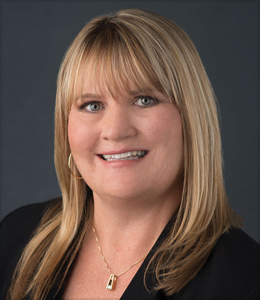
Kate Kochenderfer is the senior director of Customer Modernization at Salt River Project (SRP), a community-based, not-for-profit water and energy company serving over 2 million residents in central Arizona. With over 20 years of experience driving enterprise technology programs, Kochenderfer has led and sponsored a wide range of strategic implementations, including ERP systems, Work & Asset Management platforms, Telematics solutions and most recently, a comprehensive Customer Information System (CIS) transformation. Her leadership blends technical insight with a strong focus on change management and cross-functional collaboration. Kochenderfer holds a Master of Science in leadership from Grand Canyon University and a Bachelor of Science in business administration from Northern Arizona University.
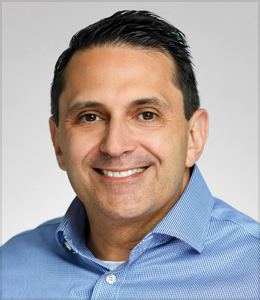
John Toubassi is the managing director of Digital Grid Solutions at TRC, a global professional services firm providing integrated strategy, consulting, engineering and applied technologies in support of the energy transition. Toubassi has over 33 years of global delivery, executive management and industry experience. With deep experience in IT/OT systems integration, advanced metering and other technologies, he is dedicated to delivering data-driven grid reliability and decentralized energy.