The new urgency for grid modernization
The U.S. electric grid stands at a critical juncture. The infrastructure that was primarily built in the 1960s and ‘70s is now struggling to keep up with current technological demands. Our grid is now at risk for catastrophic failures from age-related wear and tear, severe weather events and unbalanced supply and demand.
As industrial automation, artificial intelligence (AI), electric transportation and data centers continue to expand, the grid must evolve to keep up. Electrification and digitalization demand a new kind of infrastructure, one that is flexible, intelligent and resilient enough to keep the digital world powered under any condition.
Utilities and large energy consumers are already grappling with a tough balancing act: meeting rising demand, keeping up with new technologies and modernizing infrastructure, all without breaking budgets. The solution is not to start from scratch but to adopt a layered approach that combines traditional methods with next-generation solutions such as advanced conductors, cable rejuvenation, distributed energy resources (DERs), microgrids and strategic partnerships. The future of reliable power lies in working smarter, not just harder.
Digital demands on the grid
Digital transformation is reshaping every industry, from precision manufacturing to e-commerce logistics. At the heart of this transformation lies one fundamental requirement: uninterrupted power.
According to McKinsey’s 2024 U.S. C-suite survey, 92% of companies plan to increase their AI investments by 2027. Yet, only 1% say they have reached maturity in their AI investments. That means a massive expansion in computing capacity and, therefore, electricity demand is on our heels.
The National Electrical Manufacturers Association (NEMA) is well aware of the imminent need and, in a recent study, estimated that electrification of transportation and data center growth will increase U.S. electricity demand by approximately 2% annually over the next 25 years, with total electricity demand rising 50% by 2050. This surge is driven not only by AI and automation, but also by transportation electrification and the growth of hyperscale data centers.
In this digital-first economy, power disruptions are no longer mere inconveniences; they can cause devastating failures in critical facilities. A 2025 Ponemon study states that data center outages, for example, now average more than $500,000 per incident and can easily exceed $1 million.
The message is clear: The modern economy is power-hungry — and it expects perfect service.

As digitalization accelerates across industries, maintaining power quality and uptime is essential to ensure the reliability of AI, automation and data-driven operations. Source: Southwire
Building resilience: Grid infrastructure under pressure
Delivering digital and power resiliency is challenging in a stable environment, let alone one with an aging infrastructure, extreme weather events and increasing cyber threats.
Many underground and overhead cable networks are reaching or exceeding their design lifespans and cannot accommodate modern power loads. Moreover, storms, wildfires and flooding are now common threats. Undergrounding offers protection from wind and fire, but water can still get into lines, causing widespread outages. Full replacement of a legacy infrastructure is prohibitively expensive and logistically disruptive. According to Deloitte, U.S. grid upgrades could require a $1.4 trillion investment over the next five years, with similar levels of spending projected through 2050. While the need is urgent, few utilities have the resources or budget to accommodate the need. Fortunately, there is a better and easier way forward.
Smarter upgrades, not full replacements
Grid modernization doesn’t always require ripping and replacing existing infrastructure. In fact, intelligent upgrades can extend asset lifespans, increase capacity and improve performance while avoiding unnecessary costs and delays. Cable rejuvenation and the use of advanced conductors are two examples where upgrades can be made at a fraction of the cost, so that digital transformation can be supported with optimal power resiliency.
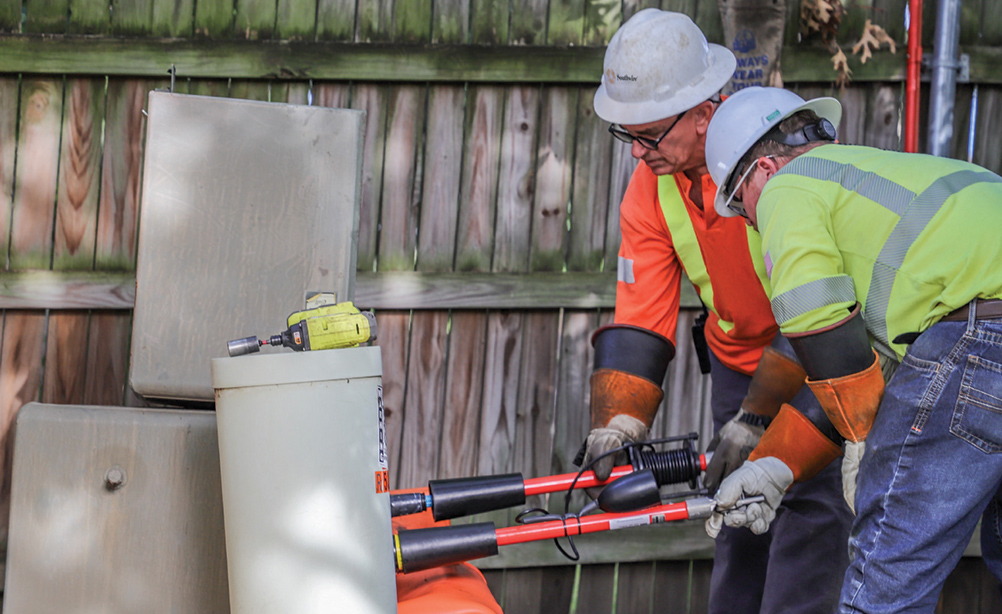
Upgrading legacy infrastructure with cable rejuvenation technologies helps extend lifespan and reduce capital outlay. Source: Southwire
Cable rejuvenation
Cable rejuvenation is a proven technique that effectively doubles underground cable life by injecting silicone into existing cables, restoring dielectric integrity, while also minimizing excavation, permitting delays and capital expenditure in comparison to rip-and-replace.
Case in Point: Dayton International Airport
AES Ohio needed a fast, reliable and cost-effective solution to eliminate repeated disruptions caused by an aging underground main feeder cable to Dayton International Airport. With flight schedules on the line, downtime wasn’t an option.
By using cable rejuvenation, they quickly treated over 42,000 feet of 1000 MCM and 500 MCM cables. The result? The project was completed in under a week, cutting anticipated costs nearly in half compared to full cable replacement.
Advanced conductors: For new builds and reconductoring
Another powerful tool in the modernization toolkit is the use of advanced conductors, particularly for overhead transmission lines. These high-capacity, low-sag conductors can double the ampacity of traditional aluminum conductor steel-reinforced (ACSR) lines without major structural replacement or modifications, slashing energization timelines from 7–10 years to as little as 2–3 years.
In new infrastructure build scenarios, advanced conductors enable system optimization, reduce costs and maximize performance through enhanced capacity, efficiency and resilience compared to traditional conductors.
Case in Point: River Crossing Clearance in Canada
A Canadian utility faced a critical clearance issue over a river. The existing ACSR conductor provided only 11.8 feet of clearance, well below the required 32.5 feet. Rather than rebuild the line entirely, the utility installed an advanced overhead conductor with high temperature and low sag, resolving the clearance issue without extensive structural changes and dramatically reducing costs and installation time.
Whether it's for new builds or system upgrades, advanced conductors allow utilities to optimize both performance and project ROI.
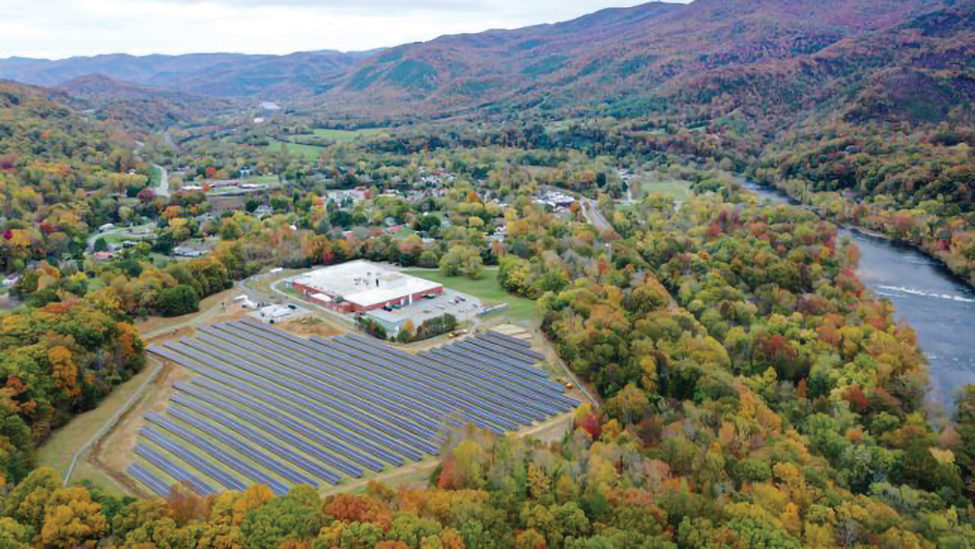
Distributed energy resources and microgrids provide flexible support for grid resiliency and localized reliability. Source: Southwire
The rise of DERs and microgrids
To bolster power reliability and flexibility, utilities are also looking to integrate with local DERs and microgrids to help balance power flows, provide peak shaving and serve as critical backup during grid outages.
Case in Point: Microgrid in Hot Springs, NC
The remote town of Hot Springs, North Carolina, historically powered by a single line through Pisgah National Forest, was prone to extended outages. Due to environmental and cost constraints, a second utility line was not feasible.
Instead, Duke Energy deployed one of the most advanced microgrids in the country: a 2-megawatt solar array and a 4.4-megawatt lithium-battery system. When Hurricane Helene wiped out the town’s substation in 2024, less than a year after integration, the microgrid kept the lights on, shortening a potential weeks-long outage to just days.
By integrating DERs and microgrids, utilities can create a more modular and adaptive grid, one that keeps power flowing even in the face of disaster.
The digital grid infrastructure
The future grid is evolving into a dynamic, data-driven ecosystem where electricity and information flow hand in hand. Beyond predictive analytics, sensor-equipped cables and load-balancing algorithms, utilities are now leveraging digital twin technology to simulate and monitor grid behavior in real time. These virtual models allow operators to test scenarios, anticipate failures and optimize performance without disrupting actual operations. Additionally, AI-powered fault detection systems can analyze vast streams of data from smart sensors to pinpoint issues before they escalate, enabling faster crew dispatch and minimizing downtime.
To further enhance coordination with DERs and demand-side management, utilities are integrating edge computing and blockchain-based energy trading platforms. Edge computing enables real-time decision-making at the grid’s edge, reducing latency and improving responsiveness to local conditions. Meanwhile, blockchain facilitates secure, transparent transactions between consumers and utilities, supporting peer-to-peer energy exchanges and dynamic pricing models.
Together, these tools form the backbone of an intelligent grid that is not only upgraded but deeply interconnected, adaptive and resilient from conductor to control room.
Funding the future: Financing grid modernization
Modernizing the grid is a monumental task. For many utilities, securing the necessary budget for these upgrades can be a significant barrier. However, a range of funding opportunities exists to help offset costs. Understanding and leveraging these options can ensure that modernization efforts move forward without undue delay.
Federal grants and programs
Federal funding plays a pivotal role in supporting grid improvement projects. While programs like the Infrastructure Investment and Jobs Act (IIJA) and Inflation Reduction Act (IRA) have allocated billions of dollars over the past few years towards grid modernization, workforce development and sustainability enhancements, the landscape is evolving under the One Big Beautiful Bill Act (OBBBA). Under OBBBA, developers and utilities face accelerated timelines, exclusion of foreign-influenced entities and stricter domestic content requirements to gain access to grant programs and tax credits.
State and local incentives
Individual states are also stepping up to assist utilities in funding grid enhancements. Many states offer grants, tax incentives, or low-interest loans to encourage investments in renewable energy integration, energy efficiency and infrastructure upgrades. Some states are even investing directly in large-scale projects, such as the construction of new power plants or nuclear facilities, to reduce strain on aging grids. Utilities that proactively engage with state energy offices and local governments can uncover tailored support options that align with their specific needs.
Public-private partnerships (PPPs)
Collaborations between public utilities and private companies can unlock innovative funding mechanisms and operational efficiencies. For example, partnerships with tech companies can help utilities leverage distributed energy resources (DERs) to enhance grid resilience. A noteworthy example is the Guadalupe Valley Electric Cooperative’s partnership with Tesla, which enables access to DER capacity through the ERCOT Aggregated Distributed Energy Resource program, improving grid reliability and creating new revenue streams.
Private investment funds
Private equity firms and institutional investors are increasingly drawn to clean energy and grid modernization projects. Utilities can tap into this interest by selling non-core assets, such as non-regulated solar or wind plants, to raise capital for modernization efforts. These funds not only bridge budget gaps but also allow utilities to focus on their core mission of delivering reliable power.
By exploring these diverse funding avenues, utilities can overcome financial challenges and ensure the grid evolves to meet the demands of a digital, electrified future.
Strategic partnerships: Scaling for the future
Despite the growing urgency, many utilities lack the internal bandwidth to implement full-scale modernization on their own. That’s where strategic partners come in.
The right partner can augment internal teams and accelerate outcomes, from planning and engineering to field testing, installation and condition assessment. They can also provide specialized services like forensic testing, disaster response and cable rejuvenation that require deep technical expertise.
When choosing a modernization partner, look for:
- A long track record in utility markets
- Proven innovation and R&D
- Comprehensive service offerings
- Rapid mobilization and support capabilities
A trusted partner should not only provide grid components, but also collaborate with utilities as a full-service partner, helping ensure that power systems are built for both today’s demands and tomorrow’s disruptions.
Powering digital progress
The grid of the 20th century cannot power the 21st. But we don’t need to start over. We need to modernize and upgrade in a smarter way.
From cable rejuvenation to advanced conductors, from DERs to microgrids, the tools to modernize the grid are already here. What is needed now is just the strategy and action to deploy them at scale.
Utilities and energy providers that act decisively can not only ensure grid resilience but also help boost digital transformation, especially when working in concert with policymakers, technology providers and consumers. This collaborative ecosystem is essential to building a smarter, more responsive and inclusive energy future.
Modernizing the grid is no longer just a technical challenge; it’s an economic, environmental and social imperative. The time to act is now.

Vinamrata (Vinni) Chadha brings over 20 years of expertise in the energy and power industries, with a focus on utilities, data centers, renewable energy and industrial systems. As director of Utility Markets & Industry Affairs at Southwire, she leads strategic planning, business development and market intelligence efforts, driving product innovation in line with emerging industry trends.
Throughout her career at Southwire, Eaton and Siemens, Chadha has spearheaded advancements in smart grid technologies, renewable energy integration and cutting-edge solutions. Her global experience across the U.S., Germany and India provides her with a distinctive perspective on market dynamics and the future of energy infrastructure.