The electricity landscape of today looks vastly different from what it did just a few years ago. In the last 12 months alone, we’ve seen a rapid and unprecedented increase in demand, largely fueled by a boom in data centers and the explosive growth of artificial intelligence (AI) and other compute-heavy technologies. Today, AI and electricity go hand in hand. According to the International Energy Agency, global investments in data centers have nearly doubled since 2022. The same report found that the U.S. accounted for 45% of global data center electricity consumption in 2024 — the largest share of any country. This surge in demand showcases the urgency for scalable, efficient and reliable solutions to modernize and maintain the power grid so the U.S. can keep up with demand.
The combination of unprecedented electricity demand and aging infrastructure has created a major challenge for utility providers. The American Society of Civil Engineers (ASCE) gave the U.S. energy infrastructure a D+ on its most recent Infrastructure Report Card, proving that our grid was not built for this level of strain. Without significant grid updates and infrastructure investments, the risk of blackouts, service delays and long-term failures continues to grow. As energy use rises and infrastructure struggles to keep up, utility crews face new challenges that demand faster and smarter solutions.
The challenges of rising demand and aging infrastructure
Power grids designed decades ago weren’t intended to support the recent soaring demand required by AI data centers and widespread EV charging stations. Without accelerated upgrades and expanded capacity, the grid risks being overwhelmed.
In this environment, every minute of downtime and every delay in field operations has broader implications. Utility workers must respond faster, troubleshoot smarter and work more efficiently — all while navigating difficult terrain and unpredictable weather conditions. That’s where technology steps in, with rugged laptops and tablets emerging as an important tool in modern utility operations.
These tools let utility crews stay productive in the field, provide instant access to real-time data and keep field teams connected to each other and the central office. Here’s a quick look at just some of the ways rugged laptops and tablets are helping utility workers overcome pressing challenges.
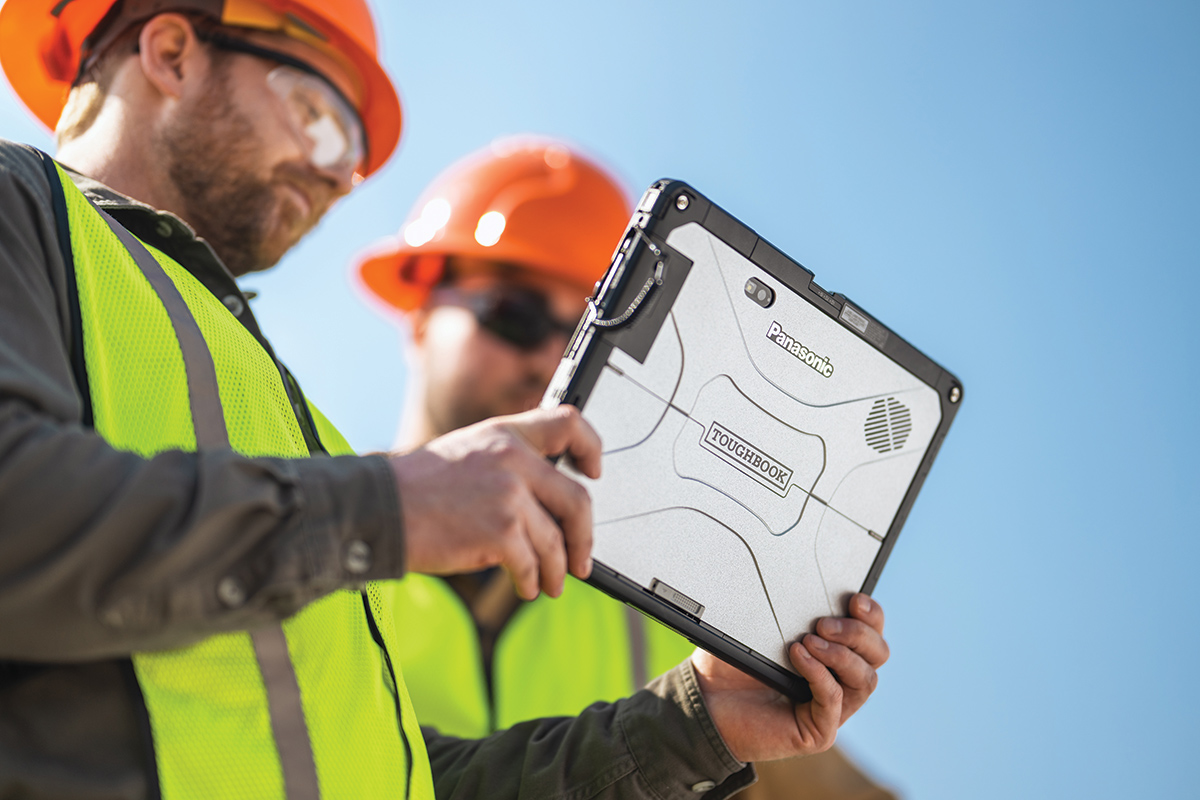
Source: Panasonic Connect
Maintaining and modernizing an aging power grid
A lot of the U.S. electric grid was built in the 1960s and 1970s, with components nearing or surpassing their intended 50 - 80-year lifespans. Maintaining and upgrading this infrastructure is a massive undertaking that requires massive amounts of time and money.
Predictive and preventative maintenance is key to preventing costly outages and ensuring grid reliability across the country. Rugged laptops and tablets play a vital role in this transformation. Field technicians can use AI-enabled devices to analyze historical data and detect equipment anomalies before they lead to full-blown failure. Sensors embedded in the grid feed real-time data into software programs on rugged laptops and tablets, helping crews prioritize repairs and deploy resources where they’re needed most.
These devices are also designed to withstand rain, dust, extreme temperatures and rough handling, making them the ideal companion for utility workers operating in the toughest environments. For example, a field crew upgrading legacy equipment to smart grid technology can use rugged laptops or tablets to access digital designs, configure new IoT-enabled devices and run system tests on-site, even in less-than-ideal conditions. By arming workers with mobile tools that double as diagnostic centers, utility companies can transition from reactive to proactive grid management and pave the way for a more intelligent and resilient energy infrastructure.
Navigating the utility labor shortage
The utility industry is also facing a shortage of skilled workers, with research estimating that the U.S. will need to fill around 510,000 new jobs to satisfy the need for additional power. Retirements, difficulty attracting younger workers and the sheer scope of required upgrades have all stretched teams thin. However, the demand for power and the need to maintain uninterrupted service to customers continue to grow.
Rugged mobile computers help utility crews do more with fewer hands. These devices allow workers to instantly access work orders, upload photos and videos from the field and transmit large files directly from remote sites. They’re built with multiple connectivity options like 4G, 5G and other industry-specific private LTE networks. The flexibility in connectivity lets utility crews stay connected and able to access valuable details, like GIS information or data analytics, wherever the job takes them.
Rugged laptops and tablets are purpose-built for productivity. All-day battery life ensures crews can work uninterrupted through long shifts in areas where access to power isn’t always possible. User-removable expansion areas also allow for customization based on job-specific needs like additional ports for connectivity, barcode scanners to simplify the management of new grid parts and hot-swappable batteries for even more battery life. A wide range of built-in ports makes for easy connection to legacy tools and sensors still in use across many utility operations, which can come in handy when upgrading the grid. With these features built into their devices, crews can stay in the field longer, get more done and spend less time charging, searching for adapters, or dealing with incompatible equipment.
Plus, with advanced software systems, rugged computers can automate routine tasks so that crews can focus their time on critical work. With these features, rugged devices enable utility professionals to maximize their time in the field and get more done with fewer delays.
Strengthening cybersecurity at every level
With an increased reliance on digital tools and connected infrastructure comes the increased need for cybersecurity. The nation’s electricity sector remains a target for cyber criminals to exploit vulnerabilities, and cyberattacks are increasing. A successful breach could disrupt service to millions of homes, businesses and critical facilities like hospitals.
That’s why built-in and layered security features in rugged mobile computers are more important than ever. Utility companies should look for devices equipped with hardware-level encryption, enhanced firmware protections and compliance with industry security standards. These safeguards help ensure that only authorized personnel can access sensitive systems and data, even when workers are in the field. By securing these endpoints, utility providers are strengthening their defense and protecting the grid as a whole.
Powering the grid of tomorrow
To keep pace with rising electricity demand, utility companies must equip their workers with the right tools that enable faster response times, streamlined workflows, preventative maintenance and stronger security. Rugged computers and tablets are a smart investment for field teams to increase productivity and speed in building a more future-ready grid that’s equipped to handle the electricity demands of today and the future.

Chad T. Hall serves as executive business development manager at Panasonic Connect, overseeing the development of rugged mobile solutions to support the utilities sector. He obtained his bachelor’s degree in geography and master’s degree in geographic information science and cartography from Texas State University.